
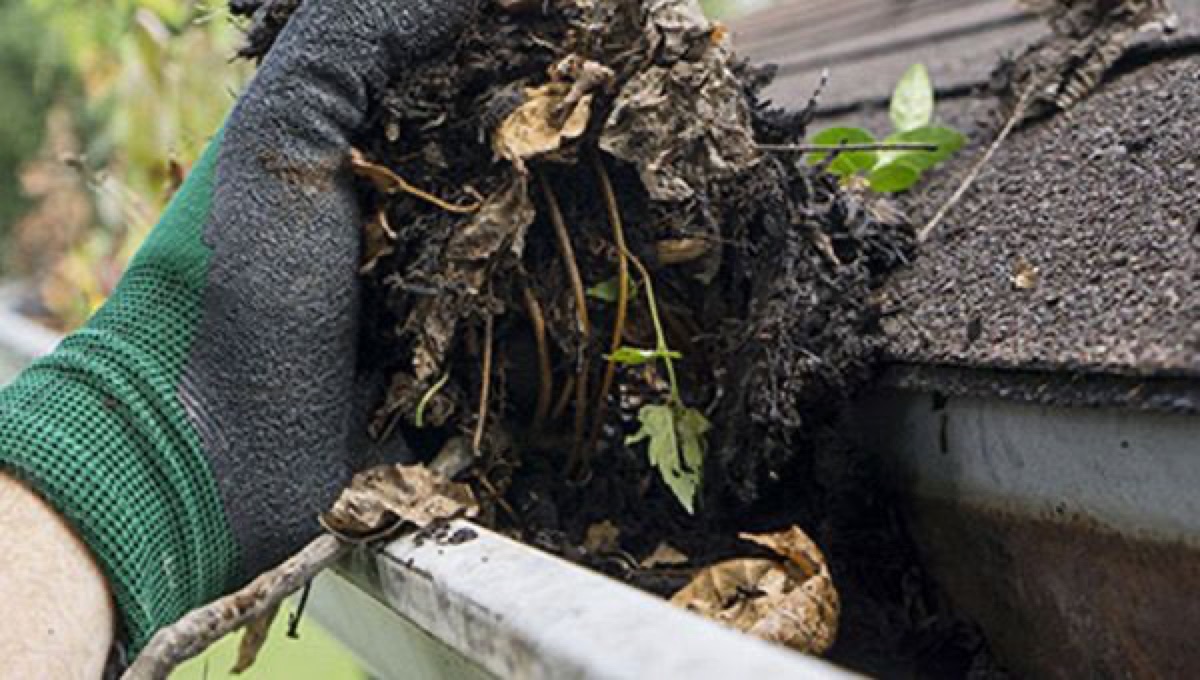
Blocked gutters don't announce themselves. There's no alarm, no warning light, no obvious sign. Then the water has already found somewhere else to go. By that point, the problem is rarely just the gutter.
What actually happens when gutters block
Gutters exist to channel rainwater from your roof to the drains, away from your property's walls and foundations. When they're blocked (with leaf debris, moss washed down from the roof, bird nest material, or compacted silt), water backs up and overflows. That water then flows down the exterior wall, saturates the ground at the base of the property, or finds its way into soffits and fascias. Each of those outcomes creates a separate problem.
The cascade of costs
A damp wall is a penetrating damp risk. Once moisture gets into masonry, it can migrate inward, causing internal damp patches, mould growth, and in older properties, damage to plaster and timbers. At the base of the wall, saturated ground puts pressure on foundations and, in some cases, contributes to subsidence. Fascias and soffits exposed to consistent water overflow rot from the inside out. Replacing them costs several times what gutter cleaning costs. None of this is dramatic or sudden. It's slow, quiet, and expensive.
How quickly do gutters block?
In the South East, most properties with significant tree cover will see meaningful gutter blockage within 12 months of a clear-out. Properties near oaks, birches, or conifers can block within a single autumn. Moss on the roof is a particularly insidious source, as it grows, it detaches and washes down into the gutters, where it compacts and holds water. This is why roof cleaning and gutter clearing are often most effective done together.
What gutter clearing actually involves
A professional gutter clear involves removing all debris by hand or with specialist vacuum equipment, flushing the gutters through to confirm the downpipes are clear, and checking that the gutters are sitting correctly and draining toward the outlet. If joints are leaking or brackets have shifted, these are flagged at the same time. It's a job that takes a couple of hours for most semi-detached or detached properties. The result is a gutter system that actually works.
How often should gutters be cleared?
For most properties in Kent, Sussex, and Surrey, once a year, ideally in late autumn after leaf fall is complete, is the standard recommendation. Properties with heavy tree cover or moss on the roof benefit from twice-yearly clearing. The cost per visit is low; the cost of not clearing is not.
If your gutters need clearing, see our gutter and fascia cleaning service. Fixed price, fully insured, covering Kent, Sussex and Surrey.